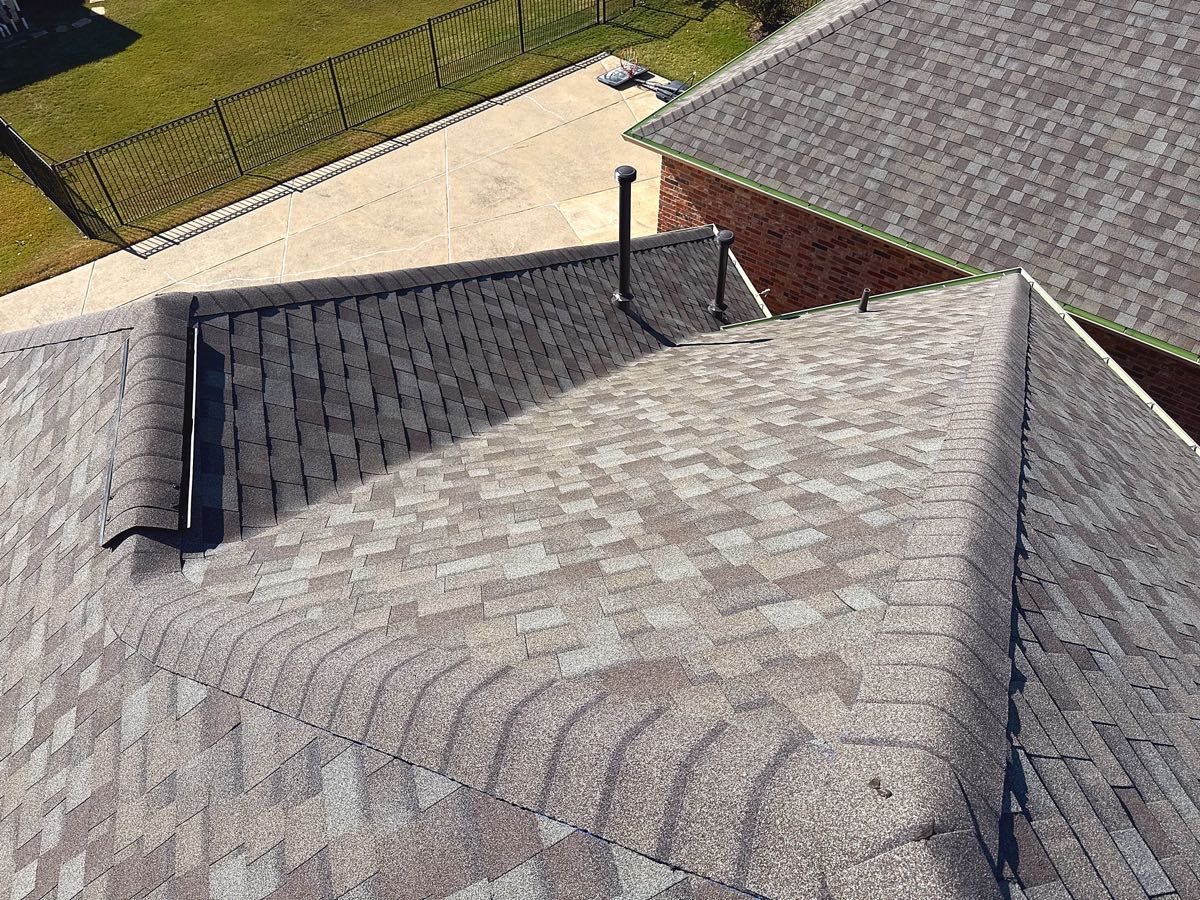
Hail damage on asphalt shingles
Most North Texas roofs are asphalt shingles, and hail marks them in a few ways:
- Granule loss. Each hit knocks the gritty top layer off and leaves a dark spot, sometimes with the black mat showing through. Granules washing out of the downspouts after a storm are a clue.
- Bruises. A soft spot that gives under your thumb, a little like a bruised apple. The shingle looks fine from a distance, but the mat underneath is broken.
- Cracks and punctures. Bigger hail can crack the shingle outright or punch a hole through it, especially on older, brittle shingles.
The hits are random. Hail doesn't fall in neat rows, so you'll see marks scattered across a slope, with more of them on the side that faced the storm.
Check the metal on the roof first
Soft metal shows hail more clearly than shingles do. Look for dents in roof vents and turbines, pipe jacks, flashing, gutters, and downspouts. Around the house, check the fins on your AC unit, window screens, and anything else made of thin metal. If those are dented, the shingles took the same hits. Adjusters look at this metal too, both to confirm hail fell at your address and to judge how big it was.
What is not hail damage
Plenty of roof wear gets mistaken for hail, and an adjuster will separate it out:
- Blistering: small raised bubbles that pop and leave pits, caused by heat and moisture in the shingle rather than impact.
- Normal granule wear on an older roof, which is even across the whole slope instead of scattered spots.
- Scuffs and scrapes from foot traffic, tree limbs, or a satellite installer.
- Dark streaks running down the roof, which are algae, not damage.
The tell is the pattern. Hail is random and leaves the metal dented. Wear and blistering follow the age and exposure of the roof.
Hail on metal and impact-resistant roofs
On a metal roof, hail usually leaves dents. Whether a dent counts as damage depends on whether it affects how the roof sheds water, and some Texas policies exclude purely cosmetic damage to metal roofs, so read yours. Class 4 impact-resistant shingles take a lot more to crack, but very large hail can still damage them, so they're worth checking after a big storm too.
When to get a roof inspection for hail damage
Get the roof checked after any storm that dropped hail about an inch across, roughly quarter-sized, or bigger at your house. Older roofs can be damaged by smaller hail. Other good reasons: dents in your gutters or vents, granules in the downspouts, or neighbors getting new roofs after the same storm. Don't climb up there yourself, especially right after a storm.
On our inspection, we walk every slope, mark and photograph the hits, check the vents, flashing, and gutters, and look in the attic. You get the photos and a straight answer about whether the damage is worth a claim. If it is, our storm damage team documents it and meets your adjuster on the roof. If it isn't, we'll say so. Your policy also sets a deadline for filing, so don't wait months to find out. For the full after-the-storm checklist, see our storm and hail damage guide, and watch for the storm chasers who knock on doors after every big hail event.