Why Rowlett sees more wind than some DFW suburbs
Rowlett sits along the western shoreline of Lake Ray Hubbard, and that open water changes how storms behave once they arrive. Fewer trees and buildings slow the wind down before it reaches a roofline, so gusts that lose some punch a few miles inland often hit lakefront and near-lake streets closer to full strength. That's part of why Rowlett and the eastern shoreline showed up repeatedly in storm reports after the April 2026 hail and wind event that hit the Garland and Dallas area.
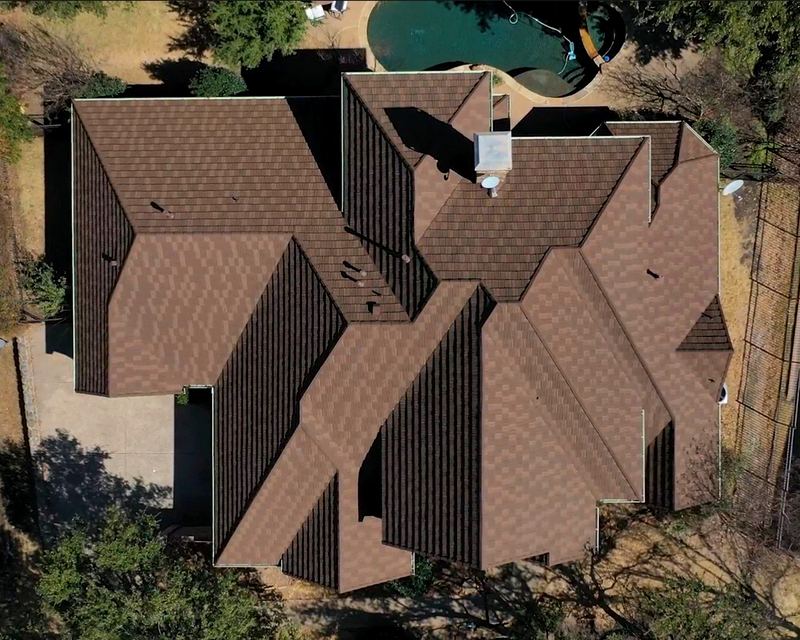
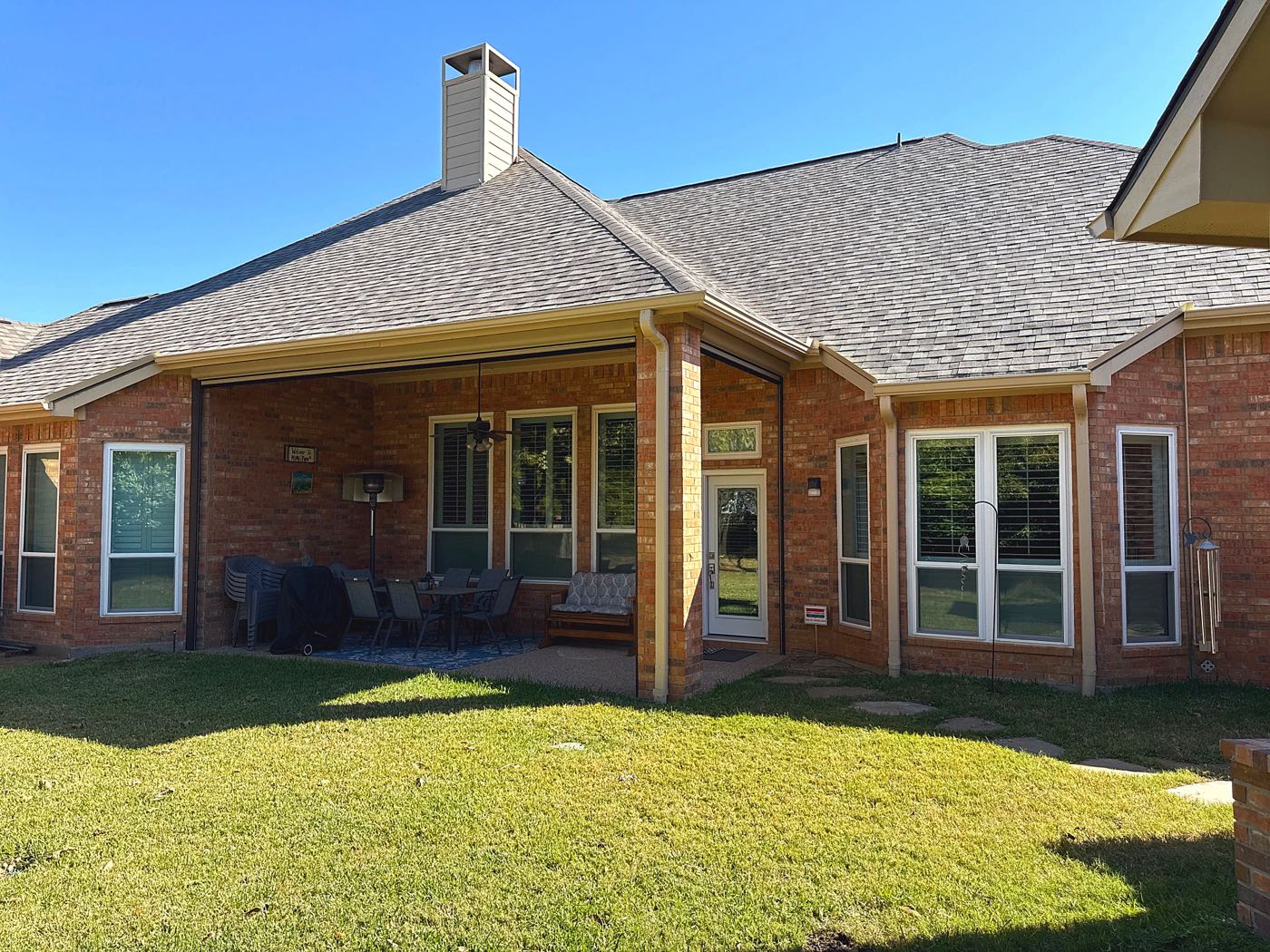
Many of Rowlett's older subdivisions have simple gable roofs, the kind with a flat vertical wall at each end. Wind hits that end wall directly and pushes up under the roof edge, a very different stress than the vertical impact hail delivers. Two identical storms can leave very different damage on a gable roof versus a hip roof, just from how the wind gets under the shingles.
How wind damage looks different from hail
Hail leaves a fairly obvious signature: dented metal, bruised or dimpled shingles, and granules knocked loose in a scattered, random pattern across the roof. Wind damage tends to be more directional and easier to miss from the ground. Look for:
- Missing or lifted shingles concentrated on one side of the roof, usually the side that faced the wind
- Shingle tabs that are creased or curled up rather than dented
- Torn or missing ridge cap shingles along the peak
- Exposed, bare felt or decking where a section peeled back
- Popped or backed-out nails you can see or feel along a shingle course
- Lifted flashing around chimneys, vents, or skylights
Many Rowlett roofs we inspect after a storm have both: hail bruising on the flat field of the roof and wind tears along the ridges and edges. Both count toward the same claim.
Does insurance treat wind differently than hail?
Not usually. Most Texas homeowner policies bundle wind and hail together as a single named peril, so a wind-only loss is generally covered the same way a hail loss would be. What changes is the deductible: Texas wind and hail claims typically carry a percentage-based deductible rather than a flat dollar amount. See our guide on whether insurance covers roof replacement in Texas for how ACV versus RCV coverage and deductibles work.
Adjusters sometimes ask more questions on wind-only claims since there's no dent to photograph as proof. That's why documentation matters: dated photos, a note on the storm date, and a professional inspection report all support the claim.
| Sign | More likely wind | More likely hail |
|---|---|---|
| Pattern | Directional, one side of the roof | Scattered across the whole field |
| Shingle condition | Torn, lifted, or missing | Dented, bruised, cracked |
| Metal surfaces | Bent or peeled flashing | Round dimples and dents |
What to do after a windstorm near the lake
If a storm just moved through Rowlett, a few steps now can save you headaches later:
- Photograph any obviously missing or lifted shingles from the ground, don't climb up yourself
- Check the attic for daylight coming through the decking or fresh water staining
- Note the date and approximate time of the storm for your claim file
- Get a free professional inspection before you file, so you know what you're actually dealing with
- Keep receipts if you have to pay for emergency tarping in the meantime
Building for wind, not just hail
If you're replacing a roof on a lake-adjacent lot, ask your contractor about wind resistance specifically, not just hail rating. Nailing pattern matters more than people realize: shingles installed with six nails instead of four hold up noticeably better in sustained wind. Class 4 impact-resistant shingles are built primarily for hail, but the heavier laminate and stronger sealant strips on most Class 4 products also help with wind. Ask about the wind warranty rating too, not just the hail rating, since the two numbers aren't the same thing.
Get a free wind and hail inspection in Rowlett
If your roof took a hit in a recent storm, whether it was clearly hail or you're just not sure what caused the damage, a free inspection gives you a straight answer. We serve Rowlett and the Lake Ray Hubbard area regularly, and we'll tell you honestly whether you're looking at a repair, a full replacement, or nothing at all.