What to do in the first hour
Before you worry about the cause, stop the water from doing more damage. Work through these steps in order:
- Contain the water. Set a bucket, trash can, or folded towels under the drip, and move furniture, electronics, and boxes out of the way.
- Relieve a bulging ceiling. If drywall is sagging or bubbling with trapped water, poke a small hole in the lowest point with a screwdriver to let it drain in a controlled way rather than collapsing on its own.
- Document everything. Photograph the stain, the drip, and any damaged belongings before you clean up. Insurers and roofers both want to see it as it happened.
- Check the attic if it's safe. A flashlight look at the underside of the roof deck often shows exactly where water is tracking in, which saves time later.
- Call a roofer. Ask for a same-day or next-day inspection rather than waiting to see if it dries up on its own.
Skip the ladder unless you're only checking gutters from the ground. Getting onto a wet roof to chase the leak yourself is where most DIY roof leak stories go wrong.
Where roof leaks in North Texas homes usually start
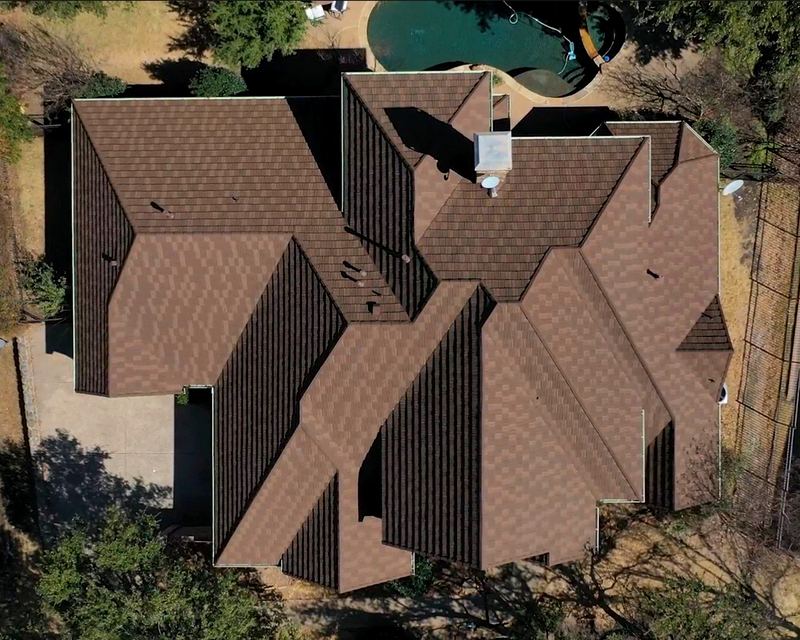
Leaks rarely come from the middle of an open shingle field. They start where two materials meet, or wherever wind has had a chance to lift something loose. The usual suspects on Garland-area homes are:
Flashing around chimneys, vents, and skylights. The metal strips sealing these penetrations can pull loose or rust through over time, especially after repeated hail hits.
Valleys, where two roof slopes meet. Valleys carry more water than any other part of the roof, so worn shingles or old sealant here fail first.
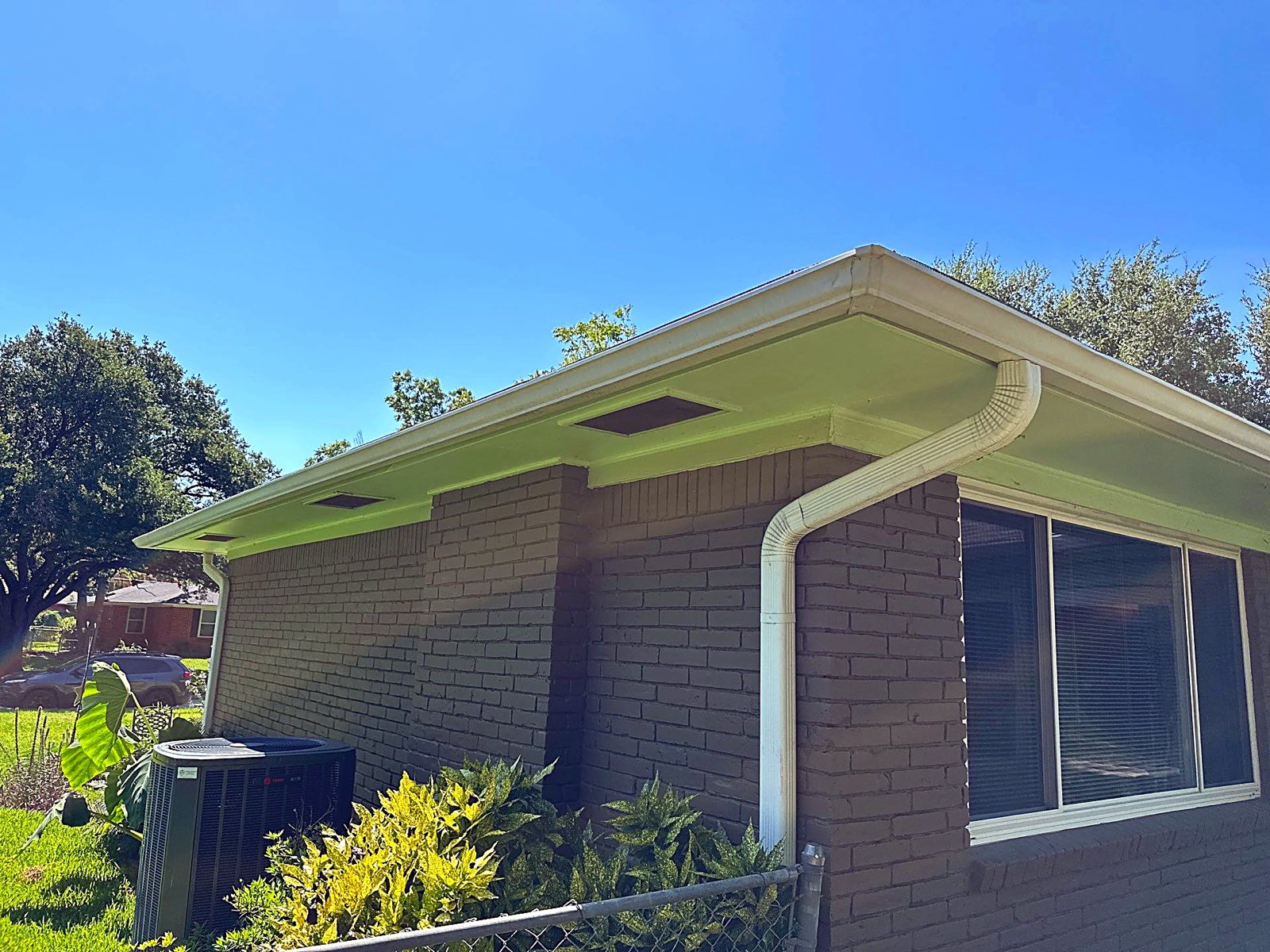
Soffit, fascia, and gutter edges. Wind-driven rain during a North Texas storm can push water up under loose fascia or overflowing gutters, which shows up as a stain along an exterior wall rather than the ceiling.
Aging or hail-bruised shingles. Granule loss and cracked mats let water through the shingle itself, not only through the edges and seams, on roofs that are getting up in years.
Should you get on the roof yourself?
We'd rather you didn't. A roof that's wet, storm-damaged, or steeper than it looks from the ground is a real fall risk, and a patch that isn't sealed correctly can trap moisture underneath and make the rot worse instead of better. It's fine to look from a ladder at the gutter line, check the attic with a flashlight, or set a tarp weighted down by boards near ground level if a section is exposed. Leave walking the roof deck and any actual repair to someone licensed to do it.
Will homeowners insurance cover the leak?
It depends on what caused it. If the leak traces back to a sudden, covered event like hail or high wind, a Texas homeowner policy generally covers the repair or roof repair minus your deductible. A leak caused by age, wear, or a maintenance issue that built up slowly usually isn't a covered loss. A contractor legally cannot pay, waive, or absorb that deductible for you either. It's a criminal offense under Texas law, so treat anyone who offers to as a red flag rather than a deal.
The only reliable way to know which category your leak falls into is a professional look at the roof. If a recent storm is the likely cause, our storm damage team can document it the way an adjuster expects to see, and our guide on whether insurance covers roof replacement in Texas walks through the claim process in more detail.
How much time do you actually have?
Less than most homeowners think. Water that's soaking into decking, insulation, and drywall doesn't wait for a convenient weekend. Left alone, a slow leak can lead to soft or rotted decking, mold growth, and even sagging framing, and North Texas humidity in the warmer months speeds that process along. A leak that would have been a straightforward shingle or flashing repair on day one can turn into a decking replacement, or worse, if it sits through a few more rounds of rain.
Temporary fixes vs. calling for emergency tarping
If a storm has torn off shingles or opened a visible hole, a proper tarp job, nailed down over furring strips rather than just draped and weighted, buys time until a full repair can be scheduled. We provide emergency roof tarping after storms throughout Garland and the surrounding area, which is a safer and more durable stopgap than anything most homeowners can rig up themselves. For an active interior drip, the bucket-and-photos approach above is the right move while you wait for that appointment.