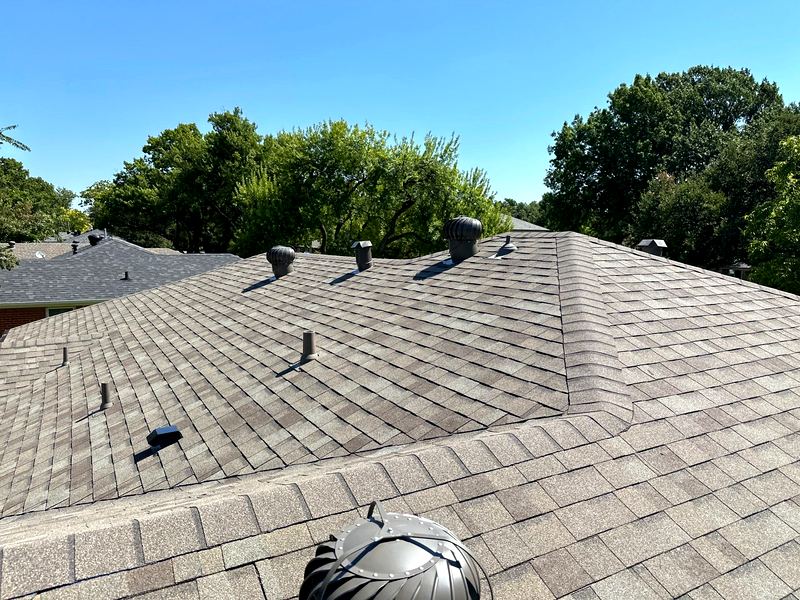
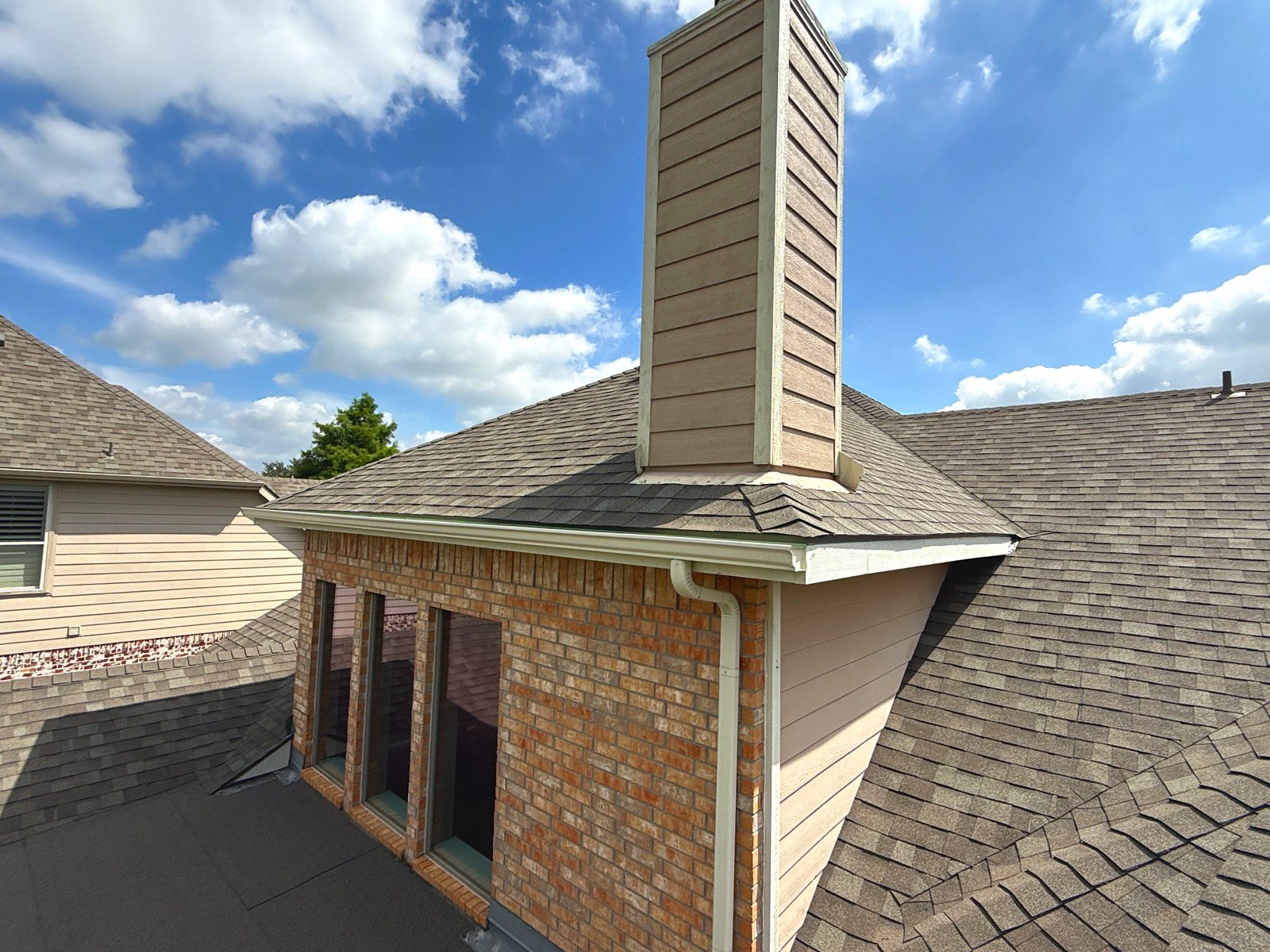
The signs that mean it's time for a new roof, not another patch
A roof rarely fails all at once. It sends warning signs first, and most homeowners miss them because they never get up close to look. Here's what we check for on almost every inspection call across Garland and the rest of DFW:
- Age: Standard asphalt shingles last 15 to 20 years in North Texas, and architectural shingles last 25 to 30 years. Once you're near or past that window, a repair only buys a little time.
- Curling or cupping shingles: Edges that lift or cup upward mean the shingle has dried out and lost its flexibility. That shingle isn't going to lie flat again.
- Granules piling up in the gutters: Every asphalt shingle sheds some granules as it ages, but a steady buildup means the protective surface is wearing through.
- Cracked, torn, or missing shingles: A handful in one spot might be a repair. Scattered damage across multiple slopes usually points to a roof failing as a system.
- Water stains or a musty smell inside: Ceiling stains, damp drywall, or a musty smell in the attic mean water is already getting past the roof deck.
- Rising cooling bills with no other explanation: A roof that's lost its seal and ventilation lets conditioned air escape and outside heat in.
- You've called a roofer for the same leak more than once: Repeated repairs on the same spot usually mean the surrounding shingles are past the point of holding a patch.
Why Texas summers make these signs show up faster
North Texas heat is hard on a roof in a way cooler climates rarely see. Shingles bake in direct sun for months, then cool off overnight, and that constant expansion and contraction dries out the asphalt and loosens granules faster than a manufacturer's rated lifespan assumes. A roof that might last close to its full rated life in a milder climate often shows these signs several years early here. That's one reason a 15-year-old roof in Garland or Mesquite can look and act more like a 20-year-old roof somewhere else.
Repair or replace: how to tell which one you need
Not every sign on this list means you need a full replacement today. A single cracked shingle after a wind event is usually a repair. Widespread curling, granule loss across every slope, or a roof already near the end of its rated life is a different story, and patching it repeatedly tends to cost more over a few years than replacing it once. We wrote a full breakdown of that decision in our roof repair vs. replacement guide, including how we weigh age, damage percentage, and the number of existing layers.
What a professional inspection actually checks
A real inspection goes well past looking at the shingles from the driveway. We check the roof deck for soft spots, the flashing around chimneys and vents for gaps, the attic for daylight or moisture, and the granule wear across every slope, not just the side facing the street. If a repair genuinely covers it, we tell you that instead of pushing a replacement. If the roof needs more than a patch, our roof repair and roof replacement teams walk you through exactly what that involves and what it costs before any work starts.
If the damage traces back to a storm
Some of these signs show up gradually from age and heat. Others show up overnight after a hailstorm or high winds, and that changes the math. If a covered storm caused the damage, a Texas homeowner policy generally pays for the replacement minus your deductible. Our storm damage and insurance team documents the damage and works directly with your adjuster, and our guide on whether insurance covers a roof replacement in Texas walks through ACV versus RCV policies and what depreciation does to an older roof's payout.
What happens if you wait
Putting off a roof that's already showing these signs rarely saves money. A slow leak behind a cracked shingle can rot the decking underneath, and decking repairs get added to the bill once a tear-off begins. Water that reaches the attic can damage insulation and drywall, which turns a roofing job into a roofing job plus interior repairs. If you're a homeowner anywhere in Garland or the surrounding DFW area and you recognize two or more of the signs above, a free inspection is the fastest way to find out whether you're still in repair territory or past it.