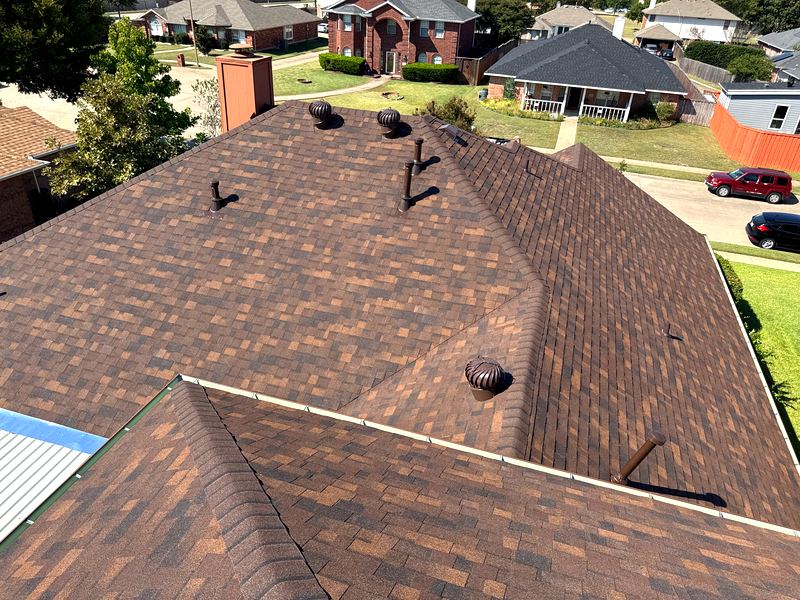
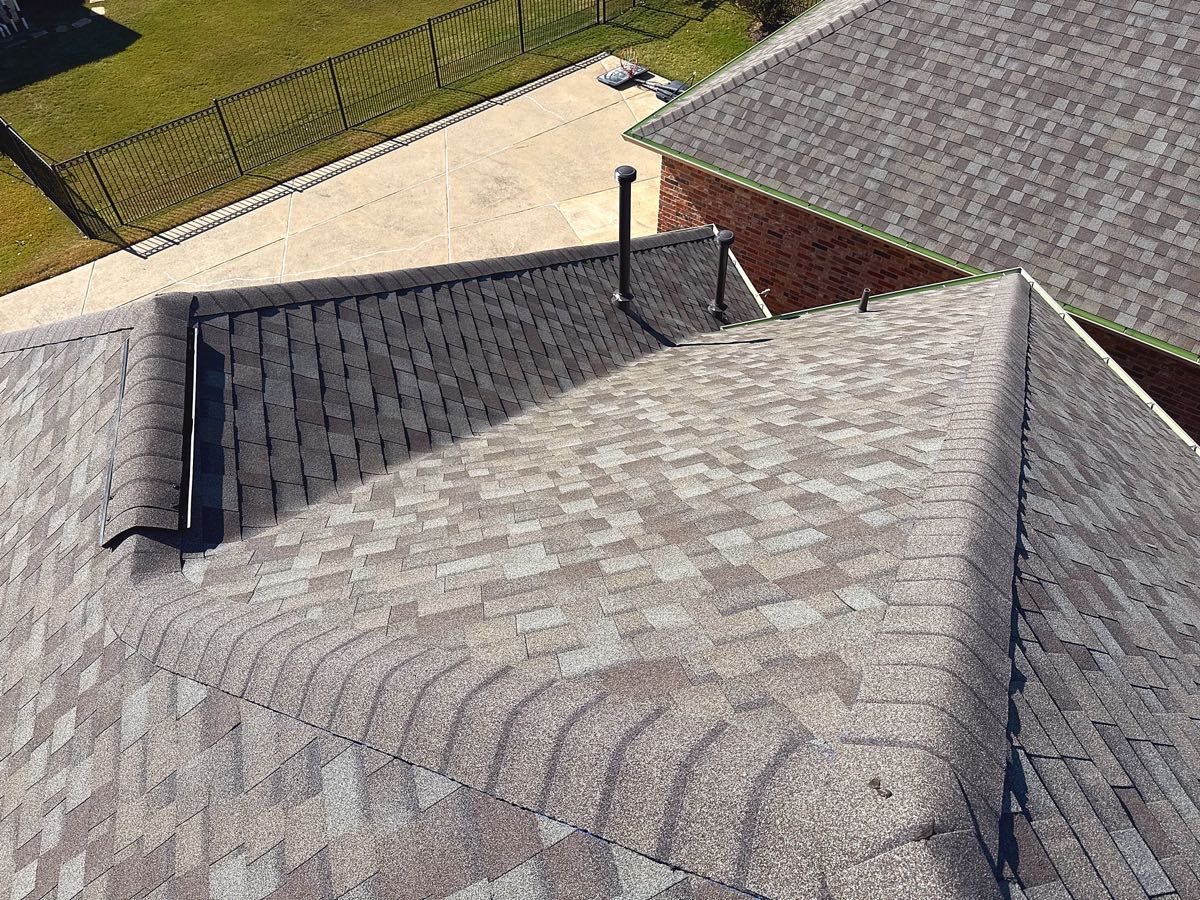
What happened on April 25-26, 2026
A severe weather complex moved across Dallas, Collin, Rockwall, Denton, Tarrant, and Parker counties over two days. Large hail was reported across the eastern Metroplex, damaging winds hit the western counties, and Garland and East Dallas sat in one of the storm's worst hail cores. Neighboring cities took hits too: Plano, Richardson, Mesquite, Rowlett, Wylie, Frisco, McKinney, and Allen all reported damage.
We felt this one at our own office on Town Square Blvd. Inspection schedules across the area filled within hours, and roofing material lead times stretched from days to weeks in the aftermath. Two months later, we're still finding April hail damage on roofs where the homeowner had no idea.
Why your roof can be damaged even if it looks fine
Hail rarely leaves a hole you can see from the driveway. What it leaves is bruising: crushed granules and fractured shingle mats that turn into leaks six months or two years down the road, long after you've stopped thinking about the storm. By then, tying the leak back to April 26 gets harder, and insurers lean on that gap to call it wear and tear.
The signs we look for on a post-hail inspection:
- Granule loss: bare or shiny spots on shingles, and granules piling up in gutters and downspouts.
- Bruising: soft, dark impact marks that feel like a bruise on an apple when pressed.
- Cracked or split shingles: impact fractures, often in a splatter pattern across a slope.
- Dented soft metals: gutters, vents, and flashing take dents at smaller hail sizes than shingles, so they tell us what the roof went through.
Our guide on identifying storm and hail damage covers each of these in more detail, with photos.
The claim clock is running
Most Texas homeowner policies require you to file a claim within one year of the date of loss. For this storm, that puts the practical deadline around late April 2027. Some policies allow two years and some are tighter, so read yours. Either way, the strongest claims are the ones documented closest to the storm.
That's the real reason to request a free hail damage inspection now even if nothing is leaking: a dated report with photos ties your roof's condition to this specific storm. File now or file in March, that documentation is what your claim stands on. If you already filed and got turned down, our guide on what to do after a denied roof claim in Texas walks through the appeal.
What you'll actually pay: Texas percentage deductibles
Texas wind and hail deductibles are usually a percentage of your dwelling coverage rather than a flat number, typically 1 to 2 percent. On a home insured for $400,000, a 2 percent deductible means roughly $8,000 out of pocket, and insurance covers the rest of the approved replacement. That number surprises a lot of homeowners, but on a full replacement it still beats paying cash, and it's exactly the math we'll walk through with you before you decide whether a claim makes sense. Our insurance coverage guide explains how the approval process works step by step.
The storm-chaser warning
Every big DFW hail event pulls out-of-town crews into Garland neighborhoods within days. Some are legitimate. Plenty are not, and the scam patterns repeat: high-pressure door knocks, demands for a signed assignment of benefits before any inspection, and the classic offer to "cover your deductible."
That last one is illegal. Texas law has prohibited contractors from waiving, absorbing, or rebating insurance deductibles since 2019, and insurers can require proof you paid yours. A contractor who opens with a free-roof offer is telling you how they do business. So we'll say it plainly: we will never offer to eat your deductible, and nobody reputable will either.
Before you sign anything after a storm, check three things: a physical local address, years in business you can verify, and reviews from your own area. Benchmark has been in Garland since 2008, our office is on Town Square Blvd, and we'll still be here next storm season, which is precisely the point.
What to do this week
- Get a free inspection on the calendar. Twenty minutes on the roof, photos of anything we find, and a straight answer, including "your roof is fine" when it is.
- Don't file blind. Filing a claim without knowing whether the damage clears your deductible can put a claim on your record for nothing. Inspect first, then decide.
- Save your storm evidence. Photos of hail on the ground, dented gutters or AC fins, and the date you noticed anything. It all helps tie damage to April 25 to 26.
- If you already have a claim going, we work with your adjuster on scope and supplements so the approved repair actually matches what your roof needs.